
Editor’s Note: This is the fourth installment in a series of posts looking into some of the the chemical pollutants that have contaminated Puget Sound’s fish and wildlife and pose one of the greatest threats to their survival. This is the second of two posts examining the effects of hormone-disrupting chemicals (including BPA) on the Sound. The first post can be found here.
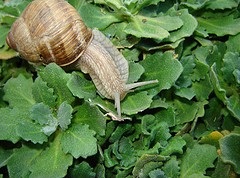
Local scientists began looking for evidence of hormone disruption in Puget Sound on the basis of evidence from laboratory studies and other areas. In the laboratory, researchers have found that snails exposed to bisphenol A (BPA) became “superfeminized,” with additional sex organs; it damaged egg production in mussels; and led to abnormal development of amphibians. Low concentrations of BPA also changed the hormonal balance in fish and disrupted sperm production[1].
The surfactant known as nonylphenol, found in detergents, cleaning products, pesticides, and personal care products, has also been seen to feminize fish[2]. Levels comparable to those in the environment caused male and juvenile rainbow trout to produce vitellogenin and impaired reproduction[3, 4]. Another culprit is estrogen itself, found in our waters in its natural form and in synthetic form as a result of birth control and hormone replacement therapy.
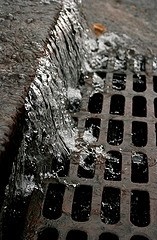
These hormone disruptors have been detected in surface water and stormwater in the Puget Sound region, and recent research has proven that local fish are exposed to them. A few years ago, King County surveyed streams, rivers, lakes, and marine waters for a number of hormone disrupting chemicals[5]. BPA was one of the more frequently detected compounds, found in 25% of stream and river samples, with nonylphenol found in 16%. BPA was found in all of the stormwater samples.
Although King County’s survey did not detect BPA in marine waters, probably because of the large dilution effect in Puget Sound, new research is finding that the Sound’s fish are exposed to the chemical. Dr. Denis da Silva, a NOAA Fisheries chemist, has developed a method to test bile for BPA and other hormone disrupting chemicals. He chose bile because of its ability to concentrate synthetic chemicals. When he tested the bile of the flatfish English sole from various sites in Puget Sound, he found it in 10 to 100% of the fish, depending on the location. He also found natural estrogen in 10 to 70% of the fish, so these chemicals could be acting in concert to affect reproduction of fish and other animals. He didn’t test for nonylphenol, which could also act together with BPA and estrogen to disrupt hormonal systems.
Hormone disrupting chemicals came to scientists’ attention in the 1980s as a potential major source of harm to people, fish, and wildlife in part because they can act at low levels. Hormonal systems in people and animals operate at the part per trillion level, so synthetic chemicals in the environment could disrupt those systems even at very low levels of contamination.
While we have been able to find these chemicals in wastewater, stormwater, and rivers and streams, up until now it has been difficult to detect them in the marine waters of Puget Sound. But as da Silva’s new work shows, that doesn’t mean they’re not present. And the long-term research to see whether Puget Sound fish are feminized and reproducing properly strongly suggests their presence is not without harm.
Johnson sums it up: “We don’t know for sure whether the levels are high enough to cause large effects, but at least from the studies we’ve been doing with the flatfish, they suggest there may be enough going on to cause problems with the productivity and reproduction of the fish.”
Photo attributions:
From top to bottom, images courtesy of flickr users Dodo-Bird and Amanda M Hatfield
- Oehlmann, J., U Schulte-Oehlmann, W Kloas, O Jagnytsch, I Lutz, KO Kusk, L Wollenberger, EM Santos, GC Paull, KJW Van Look and CR Tyler, A critical analysis of the biological impacts of plasticizers on wildlife. Philosophical Transactions of the Royal Society, 2009. 364: p. 2047-2062.
- Dickey, P., Troubling Bubbles. 1997, Washington Toxics Coalition: Seattle.
- Schwaiger, J., U Mallow, H Ferling, S Knoerr, Th. Braunbeck, W Kalbfus, and RD Negele, How estrogenic is nonylphenol? A transgenerational study using rainbow trout (Oncorhynchus mykiss) as a test organism. Aquatic Toxicology, 2002. 59: p. 177-189.
- Thorpe, K., TH Hutchinson, MJ Heatheridge, M Scholze, JP Sumpter, and CR Tyler, Assessing the biological potency of binary mixtures of environmental estrogens using vitellogenin induction in juvenile rainbow trout (Oncorhychus mykiss). Environmental Science and Technology, 2001. 35: p. 2476-2481.
- King County, Survey of Endocrine Disruptors in King County Surface Waters., R. Jack, and D Lester, Editor. 2007, Water and Land Resources Division: Seattle, Washington.